

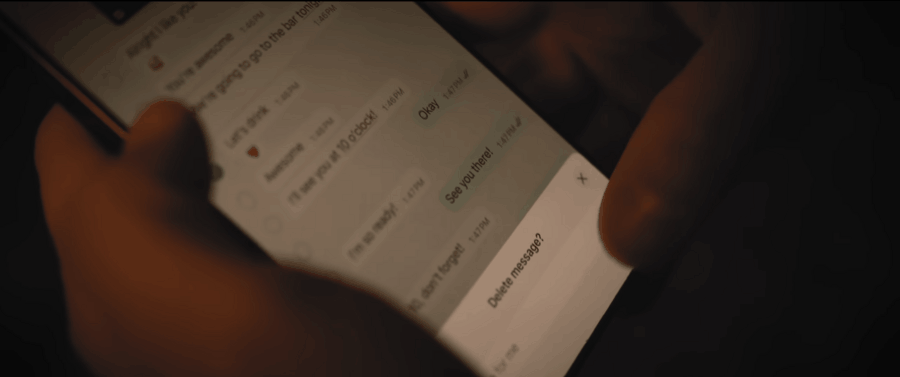
The Military Rules of Evidence (MRE) affect your case from the moment a military investigation begins — not just at a court-martial — because they govern what evidence is admissible, authentic, and reliable. If you delete texts, photos, call logs, or cloud data, you can destroy original evidence needed for your defense and create new legal risk, including potential obstruction of justice concerns under UCMJ Article 131b.
Everyday Evidence Issues Under the Military Rules of Evidence
When the Military Rules of Evidence apply, deleting texts, photos, or files can wreck your defense and look like dishonesty, putting your career, retirement, discharge characterization, VA benefits, freedom, and even your family’s stability at risk.
Under the Military Rules of Evidence, deleting data is disastrous. You destroy the original files required to prove your innocence, and you hand investigators proof of “consciousness of guilt.” Whether you face administrative action or criminal charges, your best defense is the truth — preserved in its original form.
If you are navigating a military investigation, do not “clean up” your phone or delete items. Keeping all possible evidence intact protects your ability to prove what really happened and avoids creating new legal problems like obstruction of justice.
This article will walk you through why the Military Rules of Evidence make it critical to preserve your phone data and other evidence once an investigation starts and how deleting or “cleaning up” information can destroy proof, look like consciousness of guilt, and create new risk under UCMJ Article 131b.
What are the Military Rules of Evidence?
Think of the Military Rules of Evidence as the rulebook for what the judge is allowed to see and consider in your case. They decide which texts, messages, and documents actually “count” in an investigation, admin board, or court-martial, and they’re tailored specifically for the military system.
The Military Rules of Evidence exist for one core purpose: to ensure that only reliable, authentic evidence is used to determine guilt or innocence without violating legal rights. This protects service members by preventing prosecutors from using evidence that can’t be verified for its truth.
Understanding the MRE is not just a legal formality — it directly determines what should be preserved and why it should be preserved:
Admissibility:
Only evidence that meets the Military Rules of Evidence standards can be used in your defense. If you delete or alter evidence, you eliminate the possibility of using it, even if it would have helped you.
Authentication:
The MRE require proof that the evidence is what you claim it is. Original files with intact metadata are far easier to authenticate than reconstructed or recovered data.
Reliability and Credibility:
The MRE ensure evidence offered to the court can be relied upon for its truth and honesty.
Chain of Custody:
If evidence passes through multiple hands or is recovered from deleted storage, the Military Rules of Evidence may exclude it unless you can prove it was not tampered with.
Critical Military Rules of Evidence for Evidence Preservation
While all MRE are important to protecting your rights, not all Military Rules of Evidence apply equally to evidence preservation. The following rules are critical to understanding what you must protect and why deleting is so dangerous.
MRE 1001 — 1003: The “Best Evidence Rule” and Original Documents
MRE 1001 defines what counts as an “original” document or recording. MRE 1002, often called the “Best Evidence Rule,” generally requires the original writing, recording, or photograph to prove its content.
This rule exists because copies can be altered, and digital files can be faked. Under MRE 1002:
- Originals are preferred: If the original text message, email, or photo exists, that is what must be used to prove what it says. A screenshot or copy is inferior.
- Duplicates can be excluded: MRE 1003 allows “duplicates” (like copies or screenshots) to be admitted, but they can be excluded if there is a “genuine question” about their authenticity.
- Metadata matters: The original file contains timestamps, sender information, and server logs that prove it was not faked. A screenshot lacks this critical information.
Why This Matters to You:
If you delete the original text thread and only keep screenshots, your attorney may be unable to use those screenshots as evidence. The prosecution can argue they are manipulated or incomplete, and a judge may exclude them entirely.
Deleting evidence could have long‑term consequences far beyond affecting the outcome of the trial. If you are suspected of deleting evidence, you may face additional charges and lose all credibility, making your side of the story meaningless.
Losing evidence not only hurts your chances at trial by potentially removing critical evidence you need to defend yourself, but also makes you look like you are hiding something — exactly the impression you cannot afford when a judge, panel, or commander is deciding your future.
MRE 901: Authentication of Evidence
Under the Military Rules of Evidence, MRE 901 requires that evidence be authenticated — meaning you must produce sufficient proof that the evidence is what you claim it is. For digital evidence like text messages, authentication requires:
- Proof of sender identity: Who sent the message? This is embedded in the original message data, not in a screenshot.
- Proof of content accuracy: Is the message unchanged since it was sent? Original files with intact metadata prove this; screenshots do not.
- Chain of custody: If the evidence was deleted and later recovered, you must prove it was not altered during recovery.
Why This Matters to You:
A text message showing the accuser consented to an encounter is useless if you cannot authenticate it. If you delete the original and try to recover it later, the prosecution will argue the recovered file is unreliable, and the message may be excluded.
MRE 106: Rule of Completeness
MRE 106 states that if you introduce one part of a conversation or document, the other party can introduce any other part that is necessary to understand the full context.
This means:
- You cannot cherry-pick evidence: If you delete unfavorable parts of a chat and keep favorable parts, the prosecution can demand that the full conversation be admitted to show context.
- Missing evidence looks suspicious: If investigators discover that part of a conversation is missing, they will argue you deliberately deleted incriminating material.
- Incomplete evidence is weaker evidence: Even if you keep some messages, if critical parts are missing, your defense is undermined.
Why This Matters to You:
Deleting “bad” messages while keeping “good” ones does not protect you — it backfires. Your attorney needs the complete conversation to build a coherent, credible defense.
Types of Evidence Service Members Need to Preserve
Digital Evidence: Phones, Computers, and Cloud Data
Messages, social media posts and chats, call logs, app data, photos, videos, location info, and backups can show timelines, alibis, consent, context of conversations, or contradictions in witness stories.
Why not delete: Deleting or factory-resetting devices, wiping cloud accounts, or “cleaning up” chats can be portrayed as consciousness of guilt and may be partially recoverable by experts anyway.
Witness Evidence and Statements
Witness contact information, notes about what they saw or heard, and early written statements help lock in their memory while it is still fresh and consistent.
Why preservation matters: If you do not track who your witnesses are, they can move, forget, or be influenced by others, making it harder for your lawyer to find them later or challenge the government’s version.
Physical Evidence: Documents, Clothing, and Access Records
Clothing, receipts, access logs, video footage, packaging, tools, and other objects can show timing, location, conditions, and whether an accusation is physically possible.
Why not discard: Throwing away, washing, or modifying items that might be important (or failing to secure documents and recordings) can deny you valuable forensic or documentary proof.
How the Military Rules of Evidence Protect You from New Charges
Preserving evidence strengthens your defense by giving your lawyer more tools to prove your version of events and reduces the risk of separate charges for tampering or obstruction under the Military Rules of Evidence.
Strengthening Your Defense and Negotiating Power
Under the Military Rules of Evidence, complete evidence gives your attorney concrete advantages:
Obstruction of Justice
Deleting, altering, or hiding evidence after you reasonably anticipate an investigation creates separate legal problems.
- Obstruction of justice charges: Under UCMJ Article 131b, deleting, altering, or hiding evidence can be treated as obstruction of justice or spoliation, which may be charged or used against you separately from the original allegation.
- Negative inferences: Keeping data intact shows you are not trying to manipulate the process, helping avoid negative inferences by investigators, prosecutors, or commanders that damage your credibility.
- Consciousness of guilt: Destroying evidence after an investigation begins signals consciousness of guilt, even if you are ultimately acquitted of the original charge.
Best Practices for Preserving Data and Messages
Backing up and preserving phone data helps protect important evidence, avoid accidental loss, and prevent accusations that you deleted or altered information. The next 72 hours are important to preserving your ability to defend yourself. Your next steps should be to preserve what evidence you have, document everything you can, and speak to a lawyer.
Preservation Steps for Digital Evidence
To comply with the Military Rules of Evidence and protect your defense:
- Enable automatic backups: Turn on automatic backups (iCloud, Google Drive, or manufacturer cloud) and confirm they are completing successfully. Ensure photos and videos are syncing to the secure cloud account and not set to auto-delete or “optimize storage” in a way that removes originals.
- Keep original files intact: Do not crop, edit, overwrite, or run files through filters if you might need them as evidence. Original files with metadata intact are required under MRE 1002.
- Avoid deletion: Do not factory reset, use “cleaner” apps, or manually delete messages, photos, or call logs once you know a dispute or investigation is possible.
Messages, Calls, and Apps
- Save text messages, messaging app chats (WhatsApp, Signal, Messenger, etc.), voicemail, and call logs; use built‑in export or backup tools where available.
- Take date‑stamped screenshots of key conversations, but keep the original messages too so your lawyer or experts can verify authenticity.
Device Handling and Access
- Secure your phone: Protect your phone with a strong passcode and avoid sharing it widely to reduce the risk of others deleting or sending messages from your account.
- Preserve the device: If you are under investigation or in serious dispute, talk to a lawyer before changing devices. Sometimes the safest option is to set the old phone aside powered off and preserved.
Documentation and Legal Coordination
- Keep a communication log: Record dates, who you spoke with, and what app or number you used to help locate data later.
- Coordinate with your attorney: Work with your defense counsel about when and how to share the phone or its contents so evidence is preserved correctly and your privacy and legal strategy are protected.
FAQs
What May Happen if I Delete Evidence?
Deleting evidence could land you in more trouble than anticipated. Once you know about an investigation or believe you may be facing an investigation, you cannot erase or intentionally lose evidence. You may think the text messages look bad or the photos are incriminating, but that data still may be recoverable by law enforcement and may lead to you being charged with obstruction of justice (Article 131b, UCMJ) or other charges and may severely impact your credibility and your attorney’s ability to either defend you or negotiate for a better plea agreement.
How to Request Preservation of Electronic Phone Data or CCTV Video?
To request preservation of electronic phone data or CCTV video, send a written preservation letter to the carrier, cloud provider, or facility identifying the account, data types, and date range. A preservation letter should be drafted and sent through your attorney to ensure legal compliance and timely delivery.
What Publication Contains the Military Rules of Evidence?
The Military Rules of Evidence are published in the Manual for Courts-Martial (MCM), 2024 Edition, compiled as Part III. The MCM is the comprehensive authority — covering the MRE, Rules for Courts-Martial, Punitive Articles, and nonjudicial punishment procedures — used by military judges, lawyers, and commanders to determine legal standards.
Every case is different. Past results reflect the facts, law, and advocacy specific to that matter and do not predict the outcome of yours.