

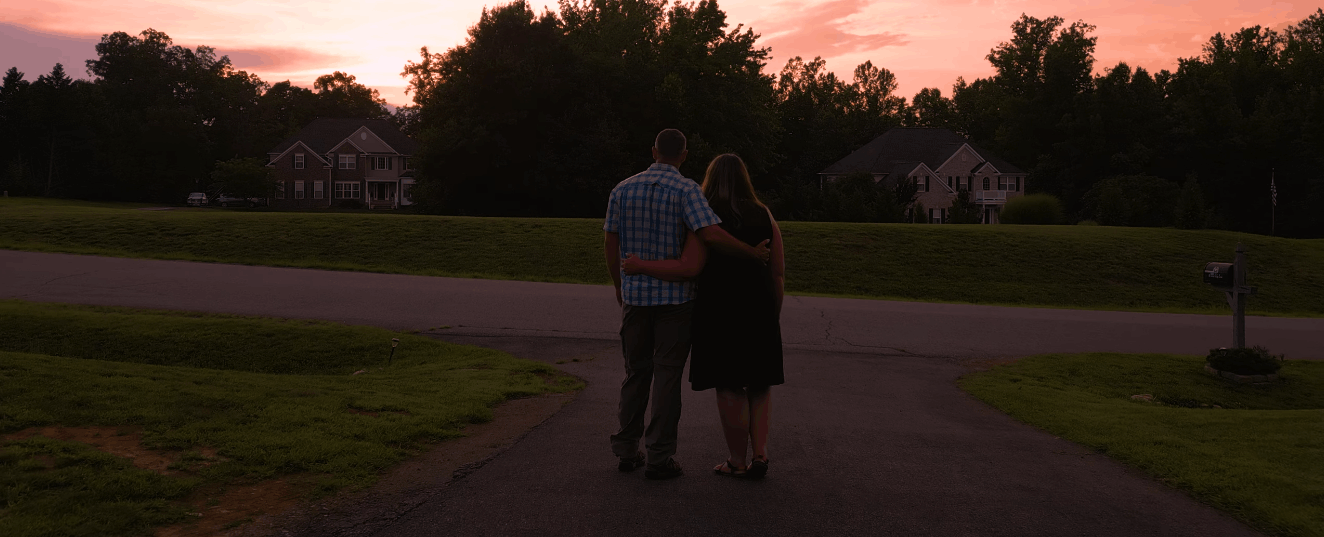
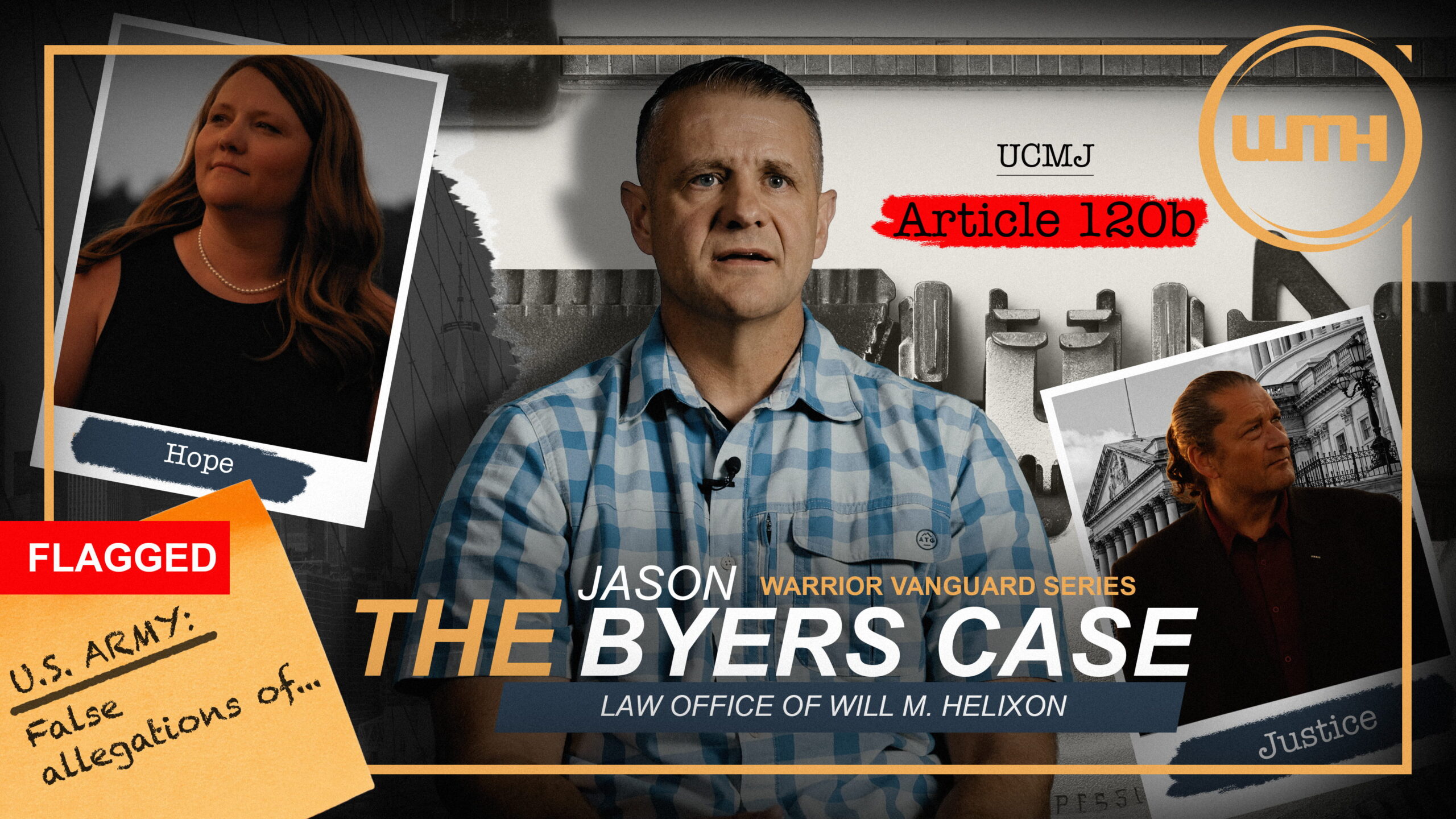
Facing false Article 120b UCMJ allegations—rape of a child—is every military chaplain’s worst nightmare. Our new 30‑minute mini‑documentary, The Jason Byers Case: False Article 120b UCMJ Allegations, tells that story in Jason’s and Audrey’s own words—and shows how a zealous defense and a courageous Preliminary Hearing Officer ultimately did what CID and OSTC failed to do: apply common sense, follow the evidence, and say “no probable cause” when the facts demanded it.
If you are a military chaplain, a caregiver who works around children, a commander, or someone facing false allegations yourself, this case study matters. It shows not only how badly a child sexual assault investigation can go wrong, but also how to fight back—methodically, ethically, and effectively—until the system is forced to correct itself.
Overview of the Case Timeline
Finding Out About the Allegations
The first time Chaplain (MAJ) Jason Byers saw the words “rape of a child” in black and white was two hours into a CID interview at Fort Drum. He had already been told he was “under investigation for allegations,” already flagged, and already pulled out of his ministry, left in professional limbo. But no one had told him what, exactly, he was supposed to have done.
A husband, father of four, and combat‑experienced chaplain who had spent his life serving soldiers and their families found himself facing Article 120b UCMJ allegations of raping a 3‑year‑old child during a sleepover at his home in Georgia.
18 Months of a Stalled Investigation
For the next 18 months, the Byers family lived under a dark cloud of suspicion. Jason was stripped of his ability to serve as a chaplain, barred from promotion and PCS, and cut off from the work he believed God had called him to do.
The Army CID case dragged on, with almost nothing happening. There were no calls to neighbors, no interviews with families they had served.
Referral of Charges
Then, after nearly a year of “investigation,” the Office of Special Trial Counsel preferred court‑martial charges anyway—based on a single child’s delayed, inconsistent, and heavily influenced statements and almost nothing else.
Article 32 Preliminary Hearing
At the Article 32 hearing, our defense team put CID’s work under a microscope—submitting a focused packet of transcripts, expert input, and concrete investigative leads the government had not pursued.
Article 32 Results: No Probable Cause
The PHO found there was no probable cause to believe Chaplain Byers committed any of the charged Article 120b UCMJ offenses and recommended dismissal and lifting of the flag. The government pushed back and ordered more investigation, but even after additional work, the PHO still found no probable cause, and the convening authority dismissed all charges.
Who Is Chaplain Jason Byers?
Jason Byers did not come into the Army as a chaplain by accident. He enlisted in the Navy as a corpsman in 1997, was honorably discharged, and later commissioned into the Army as a chaplain in 2009, dedicating himself to “provide and advise”—to safeguard the free exercise of religion for soldiers of every background and to counsel commanders on matters of ethics, morale, and faith.
For 16 years in the Chaplain Corps, he deployed, counseled, buried the dead, comforted the wounded, and walked with families through their darkest nights.
How the Article 120b UCMJ Allegations Started
2018: The Incident
In 2018, his family hosted a young girl—we will call her “Sarah”—for a sleepover with their daughter at Fort Benning, Georgia. At the time, Sarah was 3 years and 10 months old. Nothing in the Byers home suggested anything was wrong. No disclosure was made. No CPS reports were filed.
Life went on.
2023: The Allegations Surface
More than five years later, in 2023, everything changed.
Sarah’s parents brought her to a child advocacy center after noticing she was acting out sexually toward her younger sister. Rather than allowing a trained forensic interviewer to conduct an immediate, neutral interview, they began talking to her themselves—over the course of roughly a week and a half—asking if anyone had “touched her privates,” revisiting the issue night after night.
The Preliminary Hearing Officer later documented that the first night, “she said someone touched her privates,” and “the second night she elaborated further,” with parents continuing these conversations across multiple nights.
By the time Sarah was brought in for official interviews at ages 8 and 9, her story had already been filtered through her parents’ emotions, questions, and expectations. She had also stayed overnight with other adults around the same period—including a dance teacher in a different home—yet those avenues were never seriously explored by investigators.
In October and November 2023, a child forensic interviewer conducted two sessions with Sarah. The interviews were deeply flawed. The PHO later found that the questioning was highly suggestive, that the child admitted lying in the first interview because she thought she would “get in trouble,” and that critical details—like the identity and physical description of the alleged abuser—shifted depending on who she had talked to and whether she had just spoken to her mother off‑camera.
Yet, on the strength of those shaky, delayed, and inconsistent interviews alone, the Army CID placed Jason Byers’ name next to the words “rape of a child,” and initiated false Article 120b UCMJ allegations against him.
2023: Flagged and Under Investigation
On November 1, 2023, while attending a graduate program at Syracuse University, Jason’s student detachment commander called him and said simply, “You’re under investigation for allegations… CID will contact you.”
He was flagged on the spot: no promotion, no PCS, no schools, no favorable actions of any kind. Days later, he sat in a CID interview room at Fort Drum for nearly two hours before they finally told him what he was accused of.
“It said rape of a child,” he recalls. “My world sank into a very deep pit… I never imagined that my name would be associated with such horrific, horrible allegations.”
Psychological Toll of a Year Under Investigation
From that day forward, Jason’s life looked like this: no ministry, no move, no clear future. “It was as if I were crossing the stream, and I got frozen in the middle of the stream,” he says in the film. “I couldn’t go back, and I couldn’t go forward.”
For a full year after that interview, CID and OSTC held his career in their hands and did almost nothing to investigate the Article 120b UCMJ allegations beyond the initial flawed child interviews and the parents’ statements.
Audrey puts it bluntly: “There were absolutely no phone calls to any neighbors, any witnesses, any families, any friends, any youth that we’ve served with, any pastors, any chaplains, any command. Nothing. Nothing that could prove or disprove anything. There was nothing done to advocate for either family.”
Meanwhile, Jason tried to finish his schooling, sit in classrooms, and pretend to be present while his mind spun on endless loops: “Every single day during this year period, I thought about this. I woke up in the middle of the night thinking about it… In combat experiences, I was not in these low places. Through the devastations that had happened, I was not in these low places. But because of the sense of betrayal that I felt from an organization that I thought took care of their soldiers, that put me in a low, dark place.”
He hit rock bottom—shaking, overwhelmed, and wrestling with passive suicidal thoughts. When his lawyer, Will M. Helixon, received a deeply concerning text message from him, he called immediately, walked Jason through a frank conversation about suicidal ideation, and then, with Jason’s permission, notified the command and prosecutors that they were now on notice: “I’ve had a client kill themselves before. You’re on notice that if something happens to Chaplain Byers, the blood is on your hands.”
Charges Preferred Despite No Evidence
Despite the lack of evidence and the obvious investigative gaps, in November 2024, the government preferred charges for rape of a child under 12 and related sexual abuse specifications. For Jason, hearing that news was like falling through the floor again: “I hit rock bottom so hard that I was even shaking, thinking that this is it. Life is over.”
The stage was set for the Article 32 Preliminary Hearing—the point where, if the system was ever going to correct course, it had to happen.
Article 32 Preliminary Hearing: Flawed Article 120b UCMJ Investigation
At the Article 32 hearing on February 20, 2025, the Preliminary Hearing Officer was tasked with answering one basic question: did the government have probable cause to believe that Chaplain Jason Byers committed any of the three charged offenses—rape of a child, sexual abuse by sexual contact, and sexual abuse by causing the child to touch his genitals?
After reviewing more than 900 pages of defense submissions, the full CID case file, and live testimony, the Preliminary Hearing Officer concluded that the answer was “no” across the board. His written report and the defense’s witness‑request memorandum that helped frame the issues read like a checklist of what not to do in a child sexual assault investigation.
Here are some of the most important failures the blog—and the film—bring to light.
Suggestive, Parent‑Driven Questioning Before Any Forensic Interview
From the outset, Sarah’s parents took it upon themselves to question their daughter repeatedly about whether she had been “touched inappropriately,” based on her sexualized behavior with her sister. They had “a series of conversations” over approximately a week and a half, during which the story “elaborated” over time.
By the time a trained forensic interviewer ever spoke to the child, her memory had already been exposed to multiple rounds of emotionally charged, leading questions from the most powerful figures in her life. The PHO noted that children are “highly suggestible and their memories influenced by information fed to them by authority figures,” citing the same research the defense presented from Ceci, Bruck, Loftus, Poole, and others.
In other words, the investigative process had been compromised before it even officially began.
Flawed Forensic Interviews and Inconsistent Statements
The October and November forensic interviews—conducted more than five years after the alleged incident, when Sarah was around nine years old—were riddled with problems:
- Sarah admitted she did not tell the full truth in the first interview because she thought she would “get in trouble.”
- Critical details changed between interviews, including what the alleged abuser wore, what she could see, and how the alleged contact occurred.
The PHO reproduced a long exchange in which the interviewer tried to resolve contradictions, only to wind up with a scenario that made little sense.
Off‑Record Talk
Perhaps most troubling, at one point in the second interview, the recording was stopped, and the child left the room to speak with her mother off‑camera. When she returned, she suddenly “remembered” that the first letter of her friend’s name was “T”—something she had not been able to supply moments earlier. That kind of off‑camera parental consultation, immediately followed by a new “recall,” is exactly the kind of contamination that modern forensic interviewing protocols are designed to prevent.
Non‑Matching Description
Even the basic description of the alleged perpetrator did not match Jason. Sara described a man with “brownish” hair and beard, matching her early childhood memory. Jason, by contrast, never had a beard, with photos only hours before the alleged incident showing him “clean shaven.”
Five‑Year Delay and a Three‑Year‑Old’s Memory
At the time of the alleged assault, Sarah was 3 years and 10 months old. The first disclosure came more than five years later.
As the defense explained in its Article 32 witness‑request memorandum, and as the PHO echoed, this delay is not a simple “credibility” quibble. It goes to the heart of whether her statements are “reasonably trustworthy” under any meaningful probable‑cause standard.
Research shows that young children’s memories are fragile, particularly for events that are not encoded with language and contextual detail at the time they occur. Children that age are especially vulnerable to suggestion from adults—particularly parents—and to “juxtaposition of memories,” where experiences with different people and places get merged or misattributed over time.
That is why best‑practice protocols (NICHD, RATAC, APSAC, OJJDP, 10‑Step Guidelines) stress early, neutral, carefully structured interviews and warn against exactly the kind of drawn‑out, parent‑questioned, years‑later disclosures seen in this case.
A Stunning Lack of Real Investigation
Perhaps the most disturbing part of the Byers case is what CID did not do.
The PHO found that agents:
- Never meaningfully investigated other adults who had similar access. Sarah had also stayed overnight with her dance teacher around the same time, yet CID never followed up beyond asking the mother if any males were present.
- Did not seriously explore whether Sarah had stayed overnight at other houses at ages four, five, or six, which could have provided alternative suspects whose appearance and circumstances better matched her description.
- Failed to interview key character and context witnesses—neighbors, pastors, commanders, other families whose children had slept over at the Byers home—to test whether there was any pattern of concerning behavior.
- Did not even pull basic interior floor plans of the Byers house to test whether Sarah’s account of movement, bed placement, and lines of sight made sense—a step the defense ultimately took on its own by going to the housing office website.
As the PHO put it, “The lack of further investigation in any case is neither helpful to the prosecution, defense, or the convening authority.” It left everyone—especially the child and the Byers family—in limbo, with no trustworthy answers.
Article 32 Hearing Results: No Probable Cause
In his conclusion, the PHO summed it up in a single paragraph: this was a difficult Article 120b UCMJ case, made more difficult by the child’s age, the passage of time, probable parental influence, inconsistent statements, and “the lack of additional investigation conducted by CID.” Based on the totality of the circumstances, he found that there was no probable cause to believe Chaplain Byers committed any of the charged offenses and recommended dismissal and lifting of the flag.
The government objected. He stood his ground. They ordered more investigation. He reviewed it all again—and still found no probable cause.
Only then, after roughly 18 months of suspension, anxiety, and darkness for the Byers family, did the convening authority finally dismiss all charges.
How We Fought Back: Building the Article 120b UCMJ Defense
By the time charges were preferred, it was clear that if Chaplain Byers was going to be cleared, it would not be because the system suddenly came to its senses on its own. It would be because the defense forced it to confront the weaknesses of its case, one fact at a time.
From the moment our office received the CID file, we treated the case the way we wish every serious allegation was treated: with disciplined skepticism, methodical analysis, and respect for what science actually says about child memory and suggestibility.
Step 1: Rebuilding the Record
First, we had every interview audio recording transcribed word‑for‑word. Every pause, every leading question, every off‑camera break mattered. Then we read every line of every report, cross‑checking dates, descriptions, and investigative steps—or the absence of them. Jason’s recollection of his own four‑hour CID interview became a roadmap: when agents confronted him with certain “facts,” how they described the alleged perpetrator, and what time frame they claimed the incident took place in. That allowed us to see what they believed—and where the holes were.
What we found shocked even us: no physical evidence, no eyewitnesses, no prior complaints, no pattern, no corroboration. The entire case rested on a now 9‑year‑old’s contradictory statements about something allegedly happening when she was three, statements that had been shaped by repeated parental questioning and flawed forensic interviews years after the fact.
From there, we did what CID and OSTC did not: we went to the experts.
Step 2: Building the Expert Backbone
Child Forensic Interviewing Expert
We asked a veteran child forensic interviewer to review both of Sarah’s sessions and evaluate them against established protocols. The feedback was blunt: the interviews failed to adhere to key elements of evidence‑based forensic interviewing. Key problems included:
- Poorly structured rapport‑building, with irrelevant digressions that confused the purpose of the interview.
- Leading questions that suggested answers rather than drawing out a free narrative.
- Failure to lock down basic facts before moving to more sensitive topics.
- A catastrophic 20‑minute off‑camera break during which the child spoke to her mother, followed by new “memories” that just happened to fill in missing details.
Child Memory and Adolescent Memory Expert
We then consulted an adolescent memory expert to answer hard questions: What does science say about a 3‑year‑old’s ability to encode and retain detailed memories of complex events? How does language development interact with memory storage and retrieval? What happens to those memories when, five years later, an anxious parent starts asking repeated questions about “being touched” while the child is already acting out sexually because of some other trauma?
The answers were clear and sobering. At that developmental stage, children’s memories are fragile and easily reshaped. Language and memory grow together; if the language to describe an event is not there at the time, the memory remains fuzzy and susceptible to external framing. Add years of time and intense adult questioning, and you create a perfect environment for honest but inaccurate reconstructions—where children may sincerely believe what they are saying, even when they are wrong.
Forensic Pediatric Medical Expert
We also brought in a forensic pediatrician to review Sarah’s broader medical and behavioral history: bed‑wetting, sexualized behavior, emotional outbursts, and other indicators that strongly suggested she had been victimized at some point in her young life. The question was not whether she had suffered; the question was whether the right man was being blamed.
Taken together, the experts painted a consistent picture: this was an emotionally compelling allegation resting on a scientifically fragile foundation.
Step 3: The 935‑Page Article 32 Packet
Why We Went All‑In at Article 32
Armed with transcripts, expert input, and a full understanding of the investigative gaps, we made a deliberate strategic choice.
In many cases, we treat the Article 32 as little more than a discovery tool: we show up, force the government to put some cards on the table, and save most of our heavy artillery for trial. Here, we believed there was a realistic chance to kill the case at the preliminary‑hearing stage—but only if we gave the Preliminary Hearing Officer everything he needed to see just how weak the government’s case was.
The risk, of course, was obvious. A full‑frontal assault would show the prosecutors exactly how we intended to dismantle their case at trial. If the convening authority chose to ignore the PHO’s recommendation and push forward anyway, they would get a preview of our cross‑examinations, our experts, and our theory of the case.
We decided to accept that risk.
What Went Into the 935‑Page Packet
We drafted an extended memorandum—over 50 pages of analysis—attached to a bound packet that ultimately ran to roughly 935 pages. Inside that packet:
- A detailed explanation of the probable‑cause standard, drawing from Supreme Court, CAAF, and DoD guidance, and applying “totality of the circumstances,” “reasonably trustworthy,” and “common sense” to the actual facts.
- A point‑by‑point critique of the child interviews, referencing internationally recognized forensic‑interviewing protocols and showing where the interviewers deviated from best practices.
- Scientific literature on child suggestibility, memory, delayed recall, and the risks of parental questioning.
- Expert reports and summaries illustrating how each flaw in the process undermined the reliability of the government’s only evidence.
- A mapping of the Byers home, including floor plans and photographs, used to test whether the alleged sequence of events was physically plausible.
- A comprehensive witness list and synopses of expected testimony—from commanders, chaplains, pastors, neighbors, and others—designed to give the PHO a full picture of Jason’s character, the lack of any pattern, and the real‑world context in which these allegations suddenly appeared years later.
We did not simply tell the PHO that probable cause was lacking; we showed him, page after page, how every pillar the government tried to stand on crumbled under scrutiny.
He recommended dismissal of the case and lifting of the flag, concluding that this was a difficult case made harder by Sarah’s age, the passage of time, parental influence, inconsistent statements, and a lack of real military investigation. He also concluded that while the child showed signs consistent with having been abused at some point, there was no probable cause that Jason was the perpetrator.
The Government objected and asked for reconsideration. We responded with a further written submission. The PHO stood his ground: still no probable cause.
Only then did the government finally direct CID to do the investigative work that should have been done from the beginning—interviewing the witnesses we had identified, exploring alternative leads, and filling in basic gaps. “Late justice is still justice,” Jason’s lawyer told him. “But it shouldn’t have taken this long.”
What to Do When Falsely Accused
The Jason Byers documentary is not just a story about one chaplain’s vindication; it is a toolkit for anyone who suddenly finds themselves staring at a piece of paper that says “rape of a child” or “sexual abuse” or lists Article 120b UCMJ allegations next to their name when they know they are innocent.
No two cases are identical, and nothing in a blog post can substitute for personalized legal advice. But the principles that emerged from Jason’s ordeal apply broadly.
Do Not Try to “Explain Your Way Out” Alone
Jason did what most people do when they know they are innocent: he sat down with CID and talked for four hours. He answered every question. He tried to help. He believed that if he just explained, they would see that the allegation couldn’t be true.
By the time he called us, that interview was done, transcribed, and in the government’s hands.
If you are falsely accused of an Article 120b UCMJ offense or any other offense, you will be desperate to talk. You will want to “clear this up” right now. That impulse is human—and dangerous. Every word you say without counsel becomes one more data point that can be twisted, taken out of context, or used to plug holes in an already weak case. Once a narrative hardens, it is extremely difficult to chisel away at it later.
The Byers case shows why you should never walk into CID, CPS, or any interrogation room without experienced counsel. There are times when you may decide, with advice, to give a statement. But that decision should be strategic, not emotional.
Understand What “Probable Cause” Really Means
Many accused soldiers and chaplains assume that if charges are preferred, there must be “a lot of evidence.” Jason did too. When he heard that the government had pressed forward after a year‑long investigation, he naturally assumed they must have more than the shaky interviews he knew about.
They did not.
The probable‑cause standard is not proof beyond a reasonable doubt. But it does require more than suspicion or a single untrustworthy narrative. It requires “reasonably trustworthy” information that would lead a person of reasonable caution to believe a crime has been committed and that the accused committed it.
In Jason’s case, when you stripped away the emotional weight of the accusation and applied common sense, the evidence wasn’t just weak—it was structurally unsound. The child’s age at the time, the five‑year delay, the parental questioning, the flawed forensic interviews, the inconsistent descriptions, the lack of corroboration, and the absence of basic investigative work all pointed in the same direction: this was not “reasonably trustworthy” evidence.
Demand Real Investigation, Not Just Assumptions
One of the most chilling aspects of the Byers case is how little actual detective work was done before the government moved toward trial. It was the defense—not CID—who pushed for:
- Interviews with commanders, chaplains, pastors, neighbors, and families whose kids had stayed with the Byers.
- Exploration of other adults with similar access (like the dance teacher).
- Floor plans and photos of the home to test whether the alleged events made sense physically.
- Expert review of the forensic interviews and the child’s developmental capacity.
When the government won’t do that work, your defense team must. That is not “gamesmanship”; it is the only way to protect you from a system that, particularly in child‑sex cases, can slip into tunnel vision and assume guilt first, investigate later—if ever.
Center Science, Not Stereotypes
There is a harmful myth that anyone who challenges a child’s statement must be “attacking the victim” or claiming that children always lie.
We reject that framing.
In the Byers case, everyone in the courtroom could see that Sarah had likely been hurt by someone at some point. Her behavioral history and medical notes pointed toward trauma. The question was not whether she was a victim; it was whether the right person had been accused.
When false allegations arise out of genuine trauma, the only ethical approach is to respect the child’s suffering and respect the science. That means:
- Educating the court and fact‑finders on how memory and suggestibility work in young children.
- Showing how improper interviewing and parental questioning can reshape an honest child’s memory.
- Demonstrating concretely where the story does not line up with physical reality or the accused’s known characteristics.
For the falsely accused, this is not about “calling the child a liar.” It is about insisting that the legal system meets its burden of proof with reliable evidence, not just emotionally compelling stories.
Guard Your Mental Health and Your Family
The Byers documentary does not shy away from the emotional toll of 18 months under a cloud of child‑rape allegations. Jason describes shaking, despair, and feeling like his family would be “better off without” him. Audrey talks about rushing their kids to Child Protective Services with almost no warning, trying to explain the unexplainable in age‑appropriate language, and leaning on her faith to keep going.
If you are falsely accused, you will be tempted to grit your teeth and “soldier through.” That mindset nearly cost Jason his life.
You cannot fight a case like this alone. You need legal advocacy, yes—but you also need a plan to care for your mental health and your family’s well‑being. That may mean:
- Getting into counseling or pastoral care early, even if you don’t think you “need it yet.”
- Being honest with your lawyer about dark thoughts, so they can help you get support and, if necessary, intervene.
- Communicating with your spouse and children in age‑appropriate ways, so they are not left to fill in the blanks with worst‑case assumptions.
- Leaning on trusted friends and faith communities who can see past the allegation and stand with you.
Jason and Audrey’s story makes one point over and over: “Don’t do this alone.”
Think Beyond Acquittal: Clearing Your Name
When the government finally dismissed all charges against Jason, it did not magically erase the prior 18 months. He had still lost a year and a half of chaplaincy work. His children had still endured whispers and confusion. His career had still been frozen mid‑stream. His trust in the institution he had served for two decades had been shaken to its core.
But dismissal mattered. The PHO’s detailed findings mattered. The documented conclusion that there was no probable cause mattered. These are the building blocks of the next phase: rebuilding a reputation, seeking the correction or removal of derogatory records where possible, and moving forward as a cleared man rather than merely a “not convicted” one.
For others falsely accused, the goal is not simply to avoid conviction. It is to emerge with as strong a record as possible that the case should never have gone forward in the first place.
Why This Case Study Matters
There are plenty of war stories in the military‑justice world. This one is different.
The Byers documentary is not an abstract CLE or a dry doctrinal lecture. It is a 30‑minute, human‑driven story told by a chaplain, his wife, and the lawyer who stood between them and a wrongful conviction. It shows:
- How quickly a life of service can be derailed by a single allegation.
- How devastating a year‑long, poorly handled investigation can be to a family’s faith in their institution.
- How careful, science‑grounded defense work can expose weaknesses that others overlooked or chose to ignore.
- How a conscientious Preliminary Hearing Officer, armed with the right information, can still make a difference.
- How a family held onto faith, hope, and each other in the middle of the storm.
If you are:
- A chaplain or other caregiver who regularly works with children.
- A commander or first sergeant who may one day need to navigate a similar allegation in your formation.
- A JAG, advocate, or investigator who wants to understand where these cases go wrong.
- Someone who has been falsely accused—or fears one day you could be.
…this film is for you.
It will not give you easy answers. It will give you something more important: a realistic picture of what the road ahead may look like, and concrete proof that even when the system fails on the front end, it can still be forced—by facts, science, and relentless advocacy—to do the right thing in the end.
At the Law Office of Will M. Helixon, we call ourselves Warrior Advocates™ for a reason. We believe that those who serve deserve counsel who will fight just as hard for them as they have fought for their country—especially when they face the most stigmatizing allegations the law can bring.
Watch the documentary. Share it with those who need to see it. And if you or someone you care about is staring down false allegations of child sexual abuse, reach out. You don’t have to walk that journey alone.